
We left Brisbane and drove up the Bruce Highway towards Gladstone, taking two days to get there. We had to concentrate to make sure we stayed on the correct (left) side of the road, especially when entering the highway or turning onto another road.
Rural Queensland reminded us a lot of our southern states - lots of trees lining the roads, rolling hills, cattle ranches, melon and sugar cane farms, and open land.


...the Australian Zoo (Steve Irwin's zoo)...
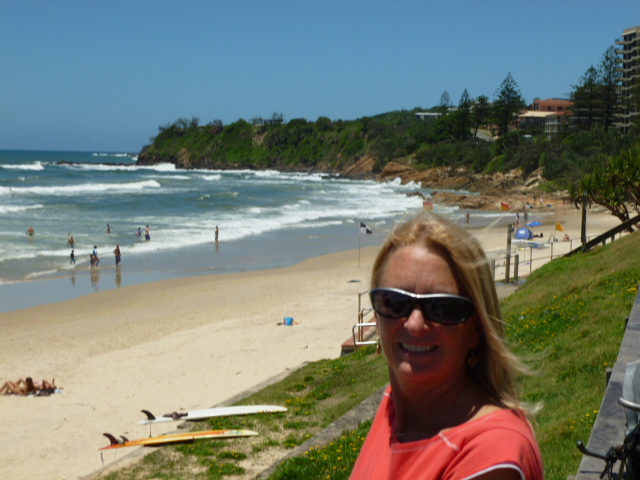
and the Sunshine Coast, which is Australia's Florida - the place pensioners (or retirees) go for the winter, summer or forever. Australia's beaches are beautiful and unlike most places we've been, uncrowded, sparsely developed, and not commercialized.
We ended our day in Bundaberg and with a trip out to Mon Repos, a turtle rookery, for an amazing nighttime experience where we...

witnessed loggerhead turtles hatching then digging their way out from under
18 inches of sand and scampering to the water.


 After the hatchlings dug their way out, the ranger dug out the nest and thoroughly sifted through all the egg shells to count how many had hatched and how many had not. She explained the whole procedure to us as she did her work and recorded the results for later research. The female hatchlings will swim around in the ocean, travelling great distances, for 30 years, then they will return to this same beach to begin reproducing, up to four times (nests) a season. The beach is imprinted into their memory during their dash to the ocean. Unfortunately, only one out of a thousand hatchlings survives to adulthood, so the chance that any of our hatchlings will return is very slim.
We also had the opportunity to observe a female loggerhead who came ashore to dig a nest and lay more than 100 eggs. Our ranger guide told us we were very fortunate - we were the first group this season (November to March) to witness both activities; most groups only get to see one or the other (and sometimes neither) as, naturally, the turtles and hatchlings are unpredictable. It was amazing to watch all this activity in complete darkness - lights and flashes distract the females from their task so we were only allowed to take pictures when she was covering up the nest and moving the sand around so the area appeared close to how it did when she arrived, her attempt to disguise the nest and protect her future babies.

Mon Repos is French for My Rest. Tom decided to rest while we were waiting for an "event" to happen.


